Follow #GEODRYTECH


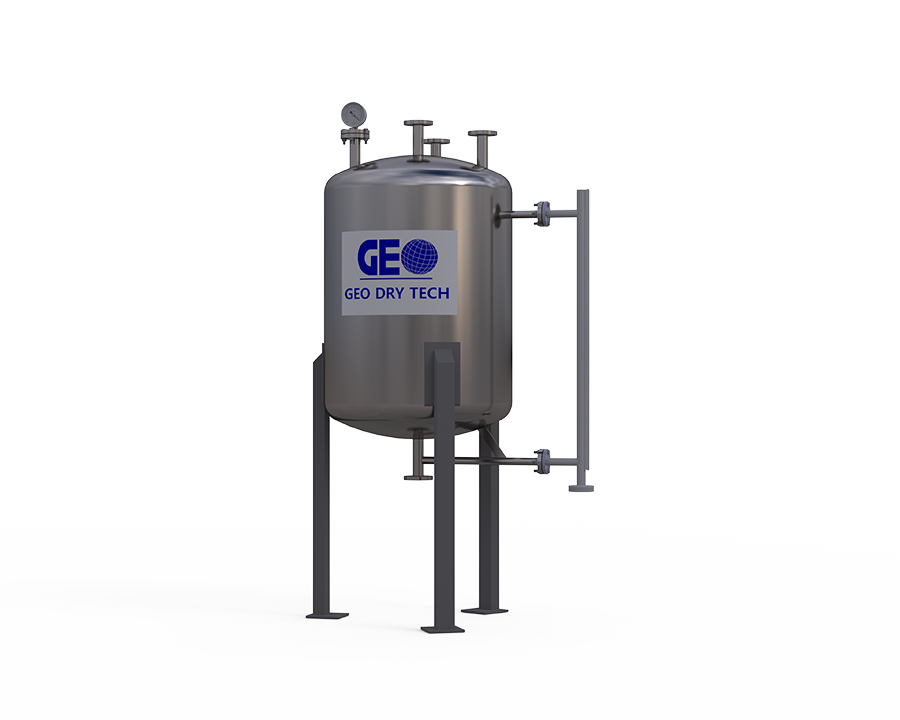
Receiver Tanks are process vessels used for the efficient collection, separation and temporary storage of condensate, solvent, filtrate and other process liquids produced during industrial drying, filtration, evaporation and vacuum processes. They are normally integrated with Rotary Vacuum Paddle Dryers (RVPD), Agitated Nutsche Filter Dryers (ANFD), Rotocone Vacuum Dryers (RCVD), a condenser, a vacuum system and process equipment.
Geo Drytech is manufacturing and exporting customised Receiver Tanks in India for various process industries such as pharmaceutical, API, chemical, speciality chemical, agrochemical, food, nutraceutical and others. Our Receiver Tanks are designed based on process needs to ensure the safe and efficient collection and recovery of liquid along with reliable performance.
Receiver Tanks can be designed for vacuum, atmospheric, or pressure applications, depending on the process. They can be designed for various capacities, materials of construction, orientations, operating temperatures, vacuum levels, nozzle arrangements and accessories.
| Parameter | Specification |
|---|---|
| Equipment | Receiver Tank |
| Application | Condensate / Solvent / Filtrate Collection |
| Capacity | As per requirement |
| MOC | SS 304 / SS 316 / SS 316L / MS |
| Orientation | Vertical / Horizontal |
| Operating Pressure | As per requirement |
| Vacuum | As per requirement |
| Operating Temperature | As per requirement |
| Design Standard | As per applicable design requirement |
| Surface Finish | As per process requirement |
| Nozzle Arrangement | Customized |
| Level Measurement | Optional |
| Insulation | Optional |
| Jacket | Optional, if required |
At Geo Drytech, Receiver Tanks are designed and fabricated for a particular process.
The equipment can be customised according to:
Capacity: Needs from laboratory and pilot scale up to large-scale, industrial capacities.
Pressure/Vacuum: Equipment can be designed for pressure or vacuum service as needed.
Material: Selection of MOC is based on the process fluid, corrosion characteristics, temperature, and customer requirements.
Connections: Can be tailored to the nozzle size, orientation, flange standards, drain systems and more.
Add accessories: Level indicators, sight glasses, gauges, insulation, heating/cooling arrangements and more can be added as desired.

The Receiver Tank is an efficient condensate, solvent, filtrate and other process liquid collection tank for drying, condensation, filtration and vacuum processes.

Receiver Tanks can be vacuum-configured and connected to vacuum drying systems. The suitable configuration is used depending on the vacuum level and process conditions.

The Receiver Tank is available in conjunction with a condenser and vacuum system to help recover the condensed solvent and to promote solvent recovery efficiency, while minimising process losses.

The material of receiver tanks depends on the process fluid, corrosion characteristics, temperature and customer requirements and can be manufactured in SS 304, SS 316, SS 316L, carbon steel/MS and other materials.

The tank is designed to be delivered vertically or horizontally, depending on the requirements for the tank's capacity, plant space, plant arrangement and the process.

Other nozzles such as process inlet, condensate inlet, vapour outlet, vacuum connection, drain, product outlet, sampling, etc. may be installed as per the Customer's process and piping needs.

The Receiver Tank allows for easy draining and transferring of collected liquids for better material recovery and process handling.

Receiver Tanks can be connected to other process equipment such as RVPD, ANFD, RCVD, condensers, vacuum systems and filtration systems as part of an overall process package.

Manholes, inspection openings, sight glasses, drains, level indicators and other accessories can be added to aid inspection, cleaning, maintenance and use.
Depending on the application, a Receiver Tank may be provided with:
The exact configuration can be selected according to the customer's process requirements.

If controlled collection of the condensate and solvents is required in the pharmaceutical manufacturing process, then it is suitable for Receiver Tanks. Applications that require high cleanliness standards, such as SS316L construction and hygienic surface finishes, can be delivered.
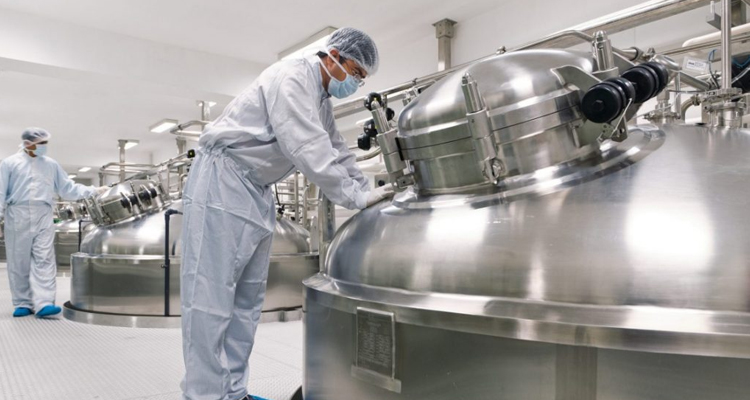
The Receiver Tanks are designed to fit into API and intermediate manufacturing systems to capture solvents and condensate from vacuum drying and solvent recovery.

Ideal for chemical and fine chemical applications for the safe and efficient collection of process liquid, condensate and solvents.

Receiver Tank is suitable for speciality chemical applications such as controlled drying, filtration, evaporation and solvent recovery operations.
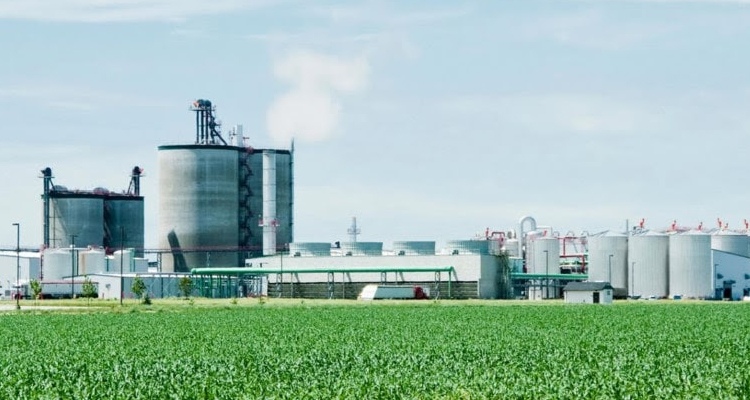
The Receiver Tanks are suitable for agrochemical drying applications to recover solvents and condensate during drying and other process operations.
In food and nutraceutical and related applications, the appropriate selection of material and surface finish enables Receiver Tanks to be used for collecting condensate and process liquids.
The use of Receiver Tanks in solvent recovery systems is common for the collection of condensed solvents in a condenser after a drying or evaporation process.
The Receiver Tank is normally located after the condenser on vacuum drying systems. Removes condensed vapours and assists in preventing liquid carryover to the vacuum pump.
Thermal processes such as drying, evaporation, condensation and others create a dedicated collection vessel for condensate generation known as a Receiver.
Depending on the process requirements, the equipment can be set for collecting the filtrate produced in filtration and separation processes.
The vapours produced from drying in a Rotary Vacuum Paddle Dryer (RVPD) system are channelled through the condenser and the condensate in the condenser is collected in the Receiver Tank.
The receiver helps with:
Condensed solvent collection
ANFD Systems
The Receiver Tank can be integrated into the vacuum and solvent recovery system when used in the application of an Agitated Nutsche Filter Dryer (ANFD), where it will gather the condensate produced in the drying cycle.
The configuration can be determined depending on the properties of the solvent, the operating temperature, the vacuum situation, the process requirements and the required collection capacity.
RCVD Systems
In Rotocone Vacuum Dryer (RCVD) applications, the Receiver Tank is an integral part of the Vapour Condensation and Vapour Recovery System. The vapours produced during the vacuum drying process are sent to the condenser, where they are condensed and sent to the receiver.
Vacuum Evaporation
The condensed liquids produced in the evaporation and recovery operations can be collected in a Receiver Tank.

Receiver Tanks collect the condensate produced during drying, condensation and vacuum processes efficiently. This allows for controlled handling of all collected liquids and easy recovery.
Combined with condensers and vacuum systems, Receiver Tanks can be used to capture and reclaim valuable solvents. This can help minimise solvent losses and increase overall process efficiency.
The Receiver Tank serves as a collection tank before the vacuum system, which will help to minimise liquid carryover towards the vacuum pump. This facilitates reliable and stable vacuum.
They can be configured vertically or horizontally, depending on plant layout, as Receiver Tanks. They can also be customised to fit the space available and can connect to different dimensions.
Specific applications can be customised for capacity, material of construction, operating conditions, nozzles, connections and accessories. This enables the Receiver Tank to be closely matched to the process requirements.
Arrangements for custom outlet and drain connections enable collected liquids to be efficiently transferred, drained and recovered. This makes handling materials easier and helps in ensuring smooth operation of the process.
Well-designed build design and connection accessibility allow for simple inspection, cleaning and maintenance. Proper design and manufacturing can aid in reducing maintenance needs and downtime in the process.
Geo Drytech manufactures process equipment with emphasis on quality, dimensional accuracy, reliable fabrication, and process suitability.
Each Receiver Tank is manufactured and inspected according to the agreed technical specifications and applicable engineering requirements.
● Dimensional inspection
● Visual inspection
● Welding inspection
● Hydrostatic testing, where applicable
● Vacuum testing, where applicable
● Nozzle and flange inspection
● Surface finish inspection
● Final inspection before dispatch
